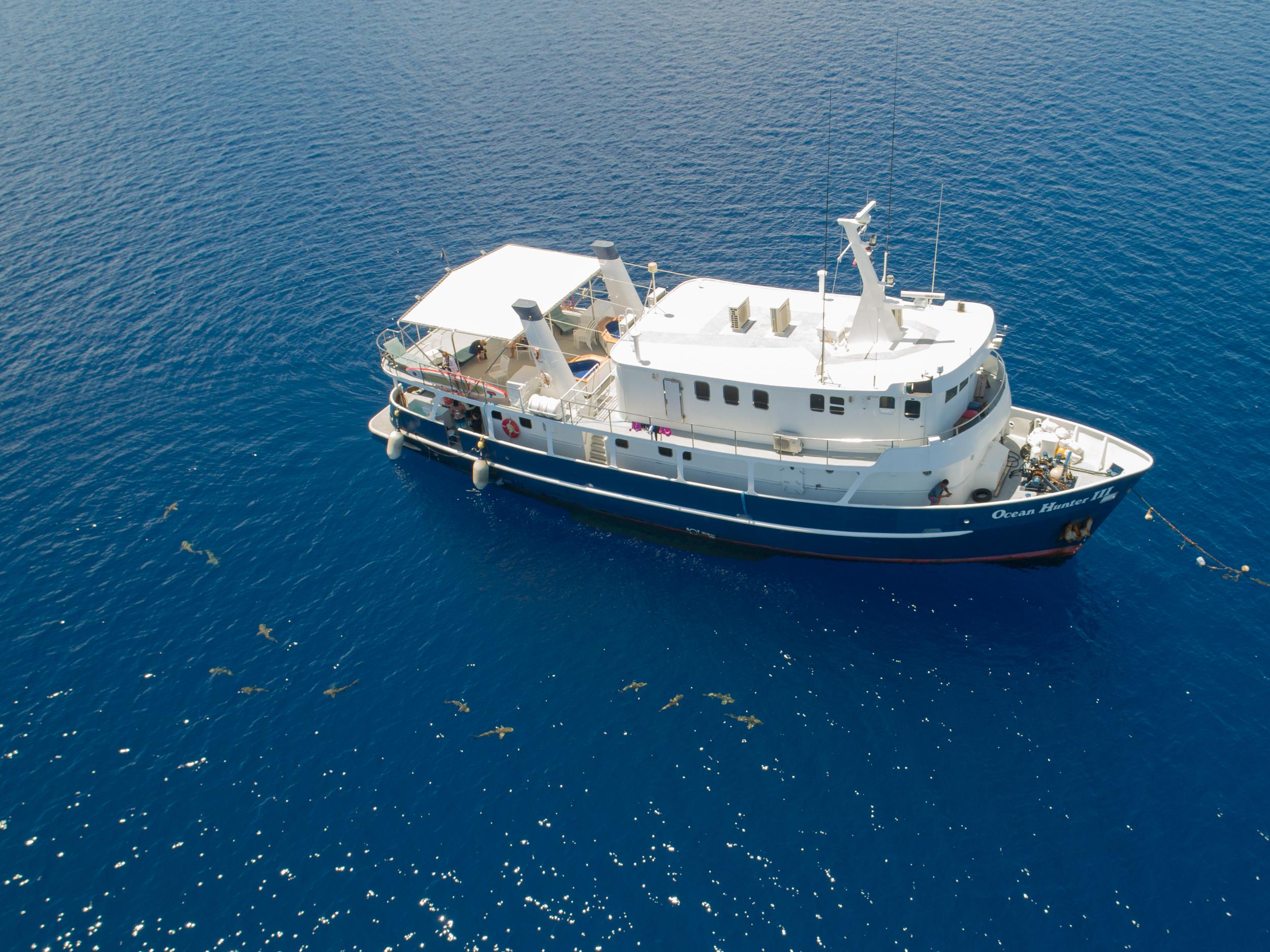
Advancing knowledge to protect Palau’s ocean future
Located within the Coral Triangle, Palau's waters are among the most biologically diverse on Earth, supporting extraordinary marine life, healthy reef ecosystems and communities that have depended on the ocean for generations.
Understanding how these ecosystems function is essential to making informed decisions that protect marine life while supporting sustainable use.
Conservation International works alongside Palauan partners, researchers and government agencies to support science that strengthens ocean management and conservation. Through research, monitoring and capacity building, we aim to contribute to the knowledge needed to guide marine protection, strengthen the management of the Palau National Marine Sanctuary and support Palau’s vision for a healthy, resilient ocean.
Understanding Palau's Whales and Dolphins
Palau's waters host at least 22 species of whales and dolphins. Through more than a decade of collaborative research led by Conservation International and partners, scientists have established the first comprehensive understanding of cetacean diversity, distribution and important habitats across Palau's waters.
Today, Conservation International continues to work alongside the Palau International Coral Reef Center (PICRC), government agencies and research partners to deepen our understanding of how whales and dolphins use Palau's ocean, how changing ocean conditions influence their behaviour, and how this knowledge can support conservation and marine management.
By combining visual surveys with technologies such as passive acoustic monitoring, satellite tagging and oceanographic research, the programme is building one of the most comprehensive long-term datasets on cetaceans in the western Pacific.
Ocean science for better conservation
Healthy oceans depend on understanding the complex relationships between marine species and the environments they inhabit. Research into ocean currents, productivity and food webs helps explain why whales and dolphins gather in certain areas and how these important habitats change over time.
This knowledge supports science-based management of Palau's marine environment by informing ecosystem monitoring, marine spatial planning and the effective management of the Palau National Marine Sanctuary. It also strengthens understanding of the offshore ecosystems that support biodiversity throughout the region.
Building knowledge and local capacity
Long-term conservation depends on strong local expertise. Conservation International supports opportunities for Palauan researchers, conservation practitioners and government partners to build skills in marine mammal research, monitoring and ocean science through collaborative fieldwork, training and knowledge exchange.
Working alongside local institutions and international partners, we are helping strengthen Palau's long-term capacity to lead cetacean research while contributing to regional and global understanding of marine ecosystems.